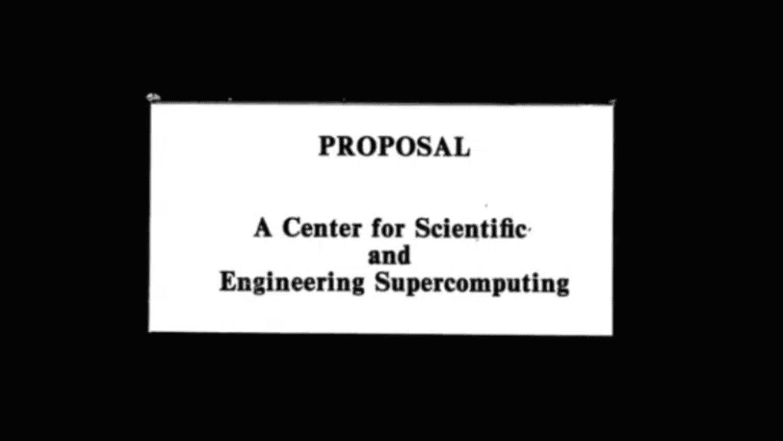
A Center for Scientific and Engineering Supercomputing
The founding proposal for a dedicated scientific and engineering supercomputing center at the University of Illinois.
Larry Smarr founded NCSA at the University of Illinois and served as its director, helping bring advanced computing, visualization, and the early web to a national research community.
Browse the NCSA founding proposal and associated publications, presentations, and media preserved in this archive.
The founding proposal for a dedicated scientific and engineering supercomputing center at the University of Illinois.
From Arpanet to NSFnet, this far-reaching partnership between government, universities and industry planted the seeds that grew into the modern cyberworld. More recently, NCSA Mosaic and NCSA’s Web server software catalyzed the development of the World Wide Web.
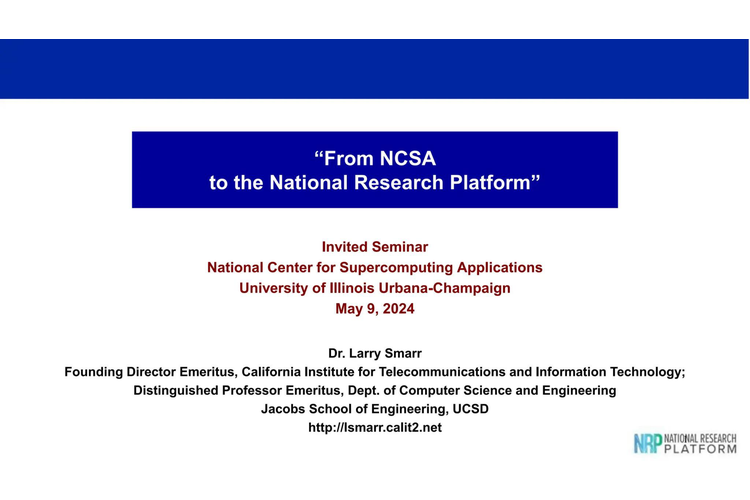
Invited Seminar National Center for Supercomputing Applications University of Illinois Urbana-Champaign May 9, 2024
The NCSA Colloquia series brings leaders in big data, big computing, and big research to the University of Illinois at Urbana Champaign to enlighten and spark innovation among researchers.
Presentation NCSA Booth Supercomputing 2006 Tampa, FL
Remote Telepresence Talk The 2006 NCSA Private Sector Program Annual Meeting In Honor of John Stevenson’s Retirement La Jolla, CA
Invited Talk NCSA 20th Anniversary Lecture Series Urbana, IL
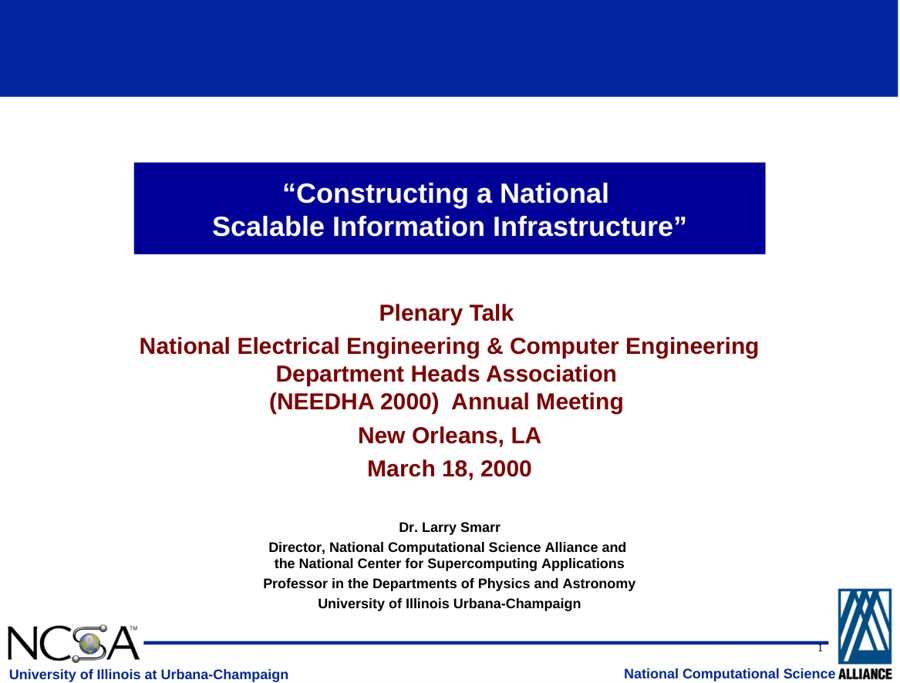
Plenary talk, National Electrical Engineering & Computer Engineering Department Heads Association (NEEDHA 2000) Annual Meeting, New Orleans, Louisiana.
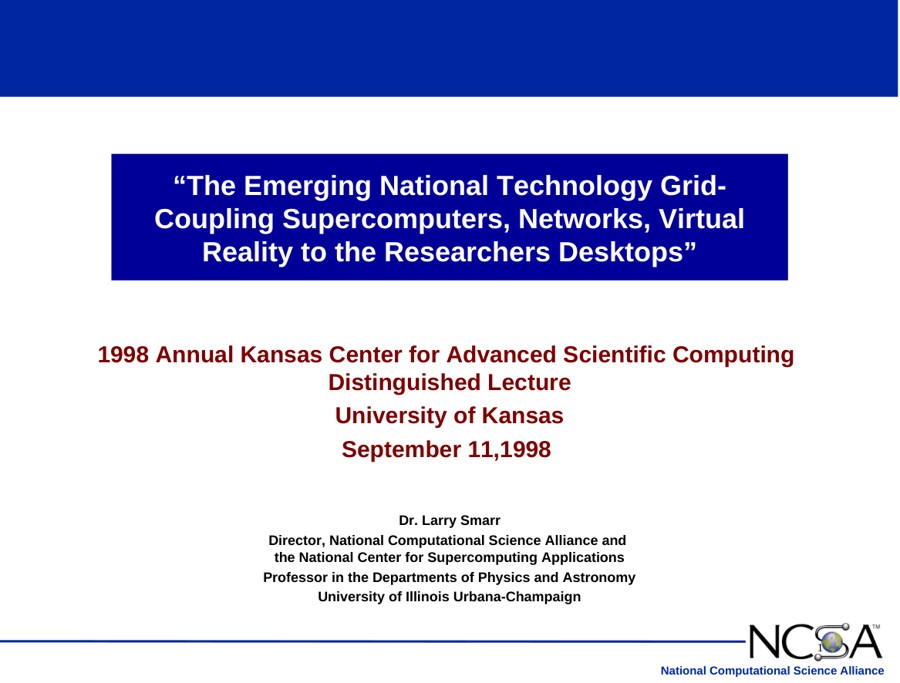
1998 Annual Kansas Center for Advanced Scientific Computing Distinguished Lecture, University of Kansas.
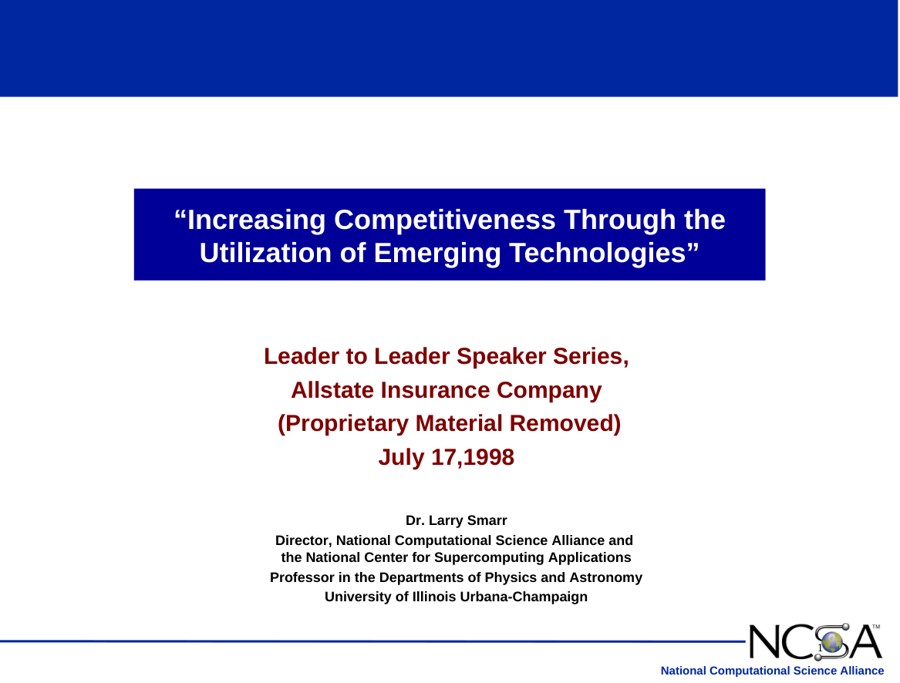
Leader to Leader Speaker Series, Allstate Insurance Company. Source presentation is labeled “Proprietary Material Removed.”
Hubert M. Blalock, Jr. Memorial Lecture Series on Advanced Topics in Social Research, University of Michigan.
Keynote presentation, Supercomputer ’98, Mannheim, Germany.
Presentation to Illinois Secretary of State George Ryan, University of Illinois Urbana-Champaign.
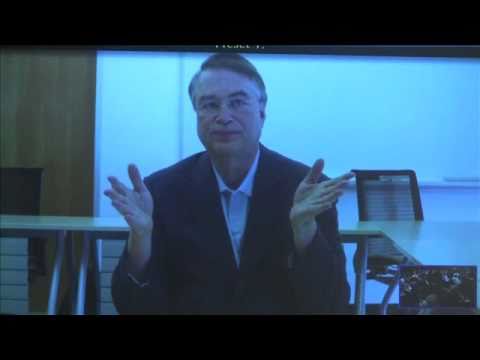
NCSA’s founding director, Larry Smarr, who now leads Calit2, spoke via a live video feed at a 25th anniversary celebration for NCSA on March 2.
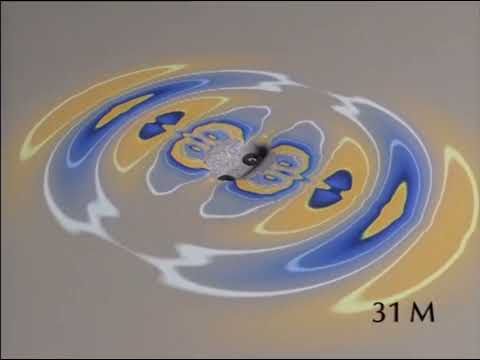
NCSA Visualization – Peter Anninos, David Hobill, Edward Seidel, Larry Smarr, Wai-Mo Suen, and Mark Bajuk.
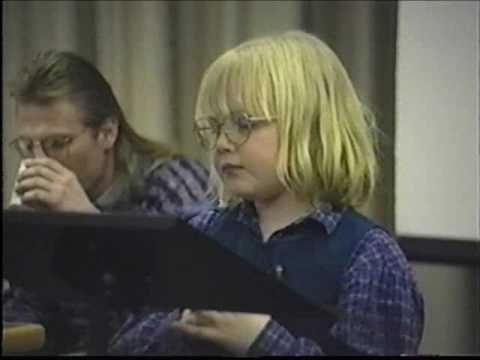
Perspectives of The Youth Forum hosted by Larry Smarr of NCSA
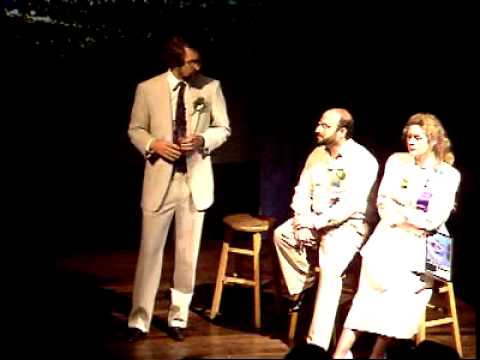
NCSA used its presence at SIGGRAPH 1989 to paint a vision of distance bing eliminated by network and computing technology.
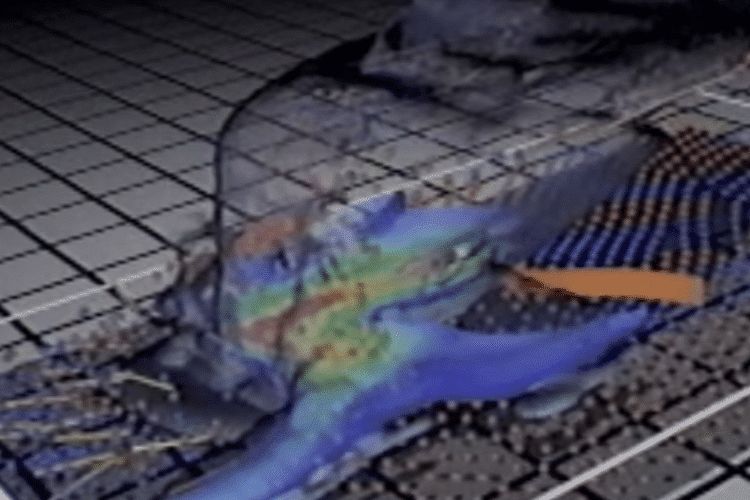
Scientific Visualizations from NCSA
The proposal was the first unsolicited submission to be approved by the NSF and led to the founding of four supercomputing centers: Cornell, Illinois, Princeton, and San Diego, with a fifth, Pittsburgh, established later.
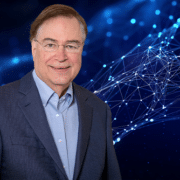
Larry Smarr, NCSA’s founder, recently came home to NCSA to give a talk on his journey from founding the Center to his work with the National Research Platform (NRP). Smarr was on campus to accept an honorary Ph.D. in computer science at the University of Illinois Urbana Champaign (UIUC) during this year’s commencement.
May 3, 2024 — High-Performance Computing (HPC) luminary and NCSA founding director Larry Smarr will be returning to the Center to give a talk titled “From NCSA to the National Research Platform” on May 9 at 12 p.m. in the NCSA auditorium on the first floor.
But 1986 did have some bright spots. IBM introduced the world’s first laptop computer. Author and humanitarian Elie Wiesel won the Nobel Peace Prize. And the National Science Foundation established the National Center for Supercomputing Applications as part of its Supercomputer Centers Program.
On Friday, Larry Smarr, whose unsolicited 1983 proposal to the National Science Foundation (NSF) begat NCSA in 1985 and helped spur NSF to create not one but five national centers for supercomputing, gave a celebratory talk at NCSA.

Larry Smarr’s major contributions to scientific progress are well known. A physicist and the founding director of the National Center for Supercomputing Applications (NCSA), he helped bring the power of computing to scientific research at a time when computers will still highly specialized instruments.

Feb. 18 — Larry Smarr, a physicist whose work at the University of Illinois at Urbana-Champaign on calculating black hole collisions led him to champion a federal commitment to dramatically enhance U.S. computing power.
This event was held during the 2006 NCSA Private Sector Program Annual Meeting. Smarr s participation demonstrated an early use of the optical link now in place between Calit2 and NCSA to enable the latter to be persistently coupled into the 10-Gbps optical fabric that Calit2, the National LambdaRail, and CENIC are building out.
The National Computational Science Alliance will introduce its first 128 processor workstation supercluster running the Linux operating system as the latest addition to the National Technology Grid, its arsenal of powerful computational resources.
September 11, 1998 – Social-science projects accounted for less than 1 per cent of the research last year at supercomputers financed by the National Science Foundation, says Larry Smarr, director of the National Center for Supercomputing Applications, at the University of Illinois at Urbana-Champaign.
Champaign, IL — J.P. Morgan recently extended its risk management capabilities through the application of new mathematical models and advanced technology, JP Morgan and the National Center for Supercomputing Applications (NCSA) announced.
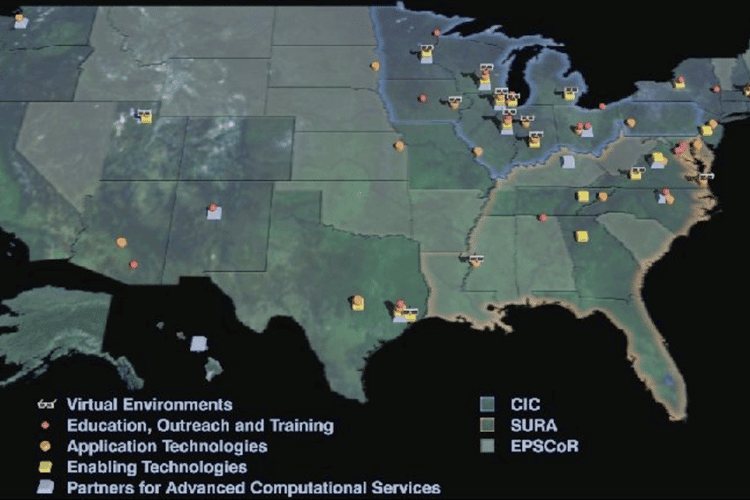
An alliance of researchers, industry, and educational leaders, linking more than 50 research partners across the country and led by the National Center for Supercomputing Applications (NCSA) at the University of Illinois at Urbana-Champaign (UIUC) becomes a reality October 1.

January 10, 1997 – Urbana-Champaign, Ill. — To further understanding of significant trends in high-performance computing at the juncture of a new year, HPCwire interviewed Larry Smarr, director of NCSA (National Center for Supercomputing Applications) about his view of the most important developments that have taken place in the industry during 1996 and those which might be anticipated in the 12 months ahead.
Larry Smarr highlights many areas of research being done at NCSA (National Center for Supercomputer Applications) for television program The New Explorers
NCSA used its presence at SIGGRAPH 1989 to paint a vision of distance bing eliminated by network and computing technology.
John Russell of HPCwire interviews Larry Smarr, a physicist whose work on calculating black-hole collisions led him to champion a federal commitment to boost U.S. computing power, which in turn led to the development of NCSA Mosaic, the precursor to Web browsers.